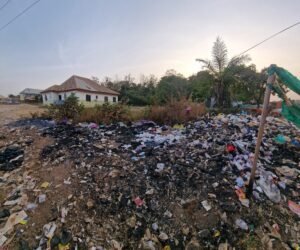
Everywhere you look in Nigeria today, waste is part of the landscape, plastic bottles floating in gutters, cans tossed on roadsides, and even old electronics dumped in open fields. According to the World Bank, Nigeria is Africa’s largest generator of solid waste, and most of it is either burnt or left unmanaged.
The truth is, we already know the problem. What we need are the right systems to fix it. Two of the most effective global models are Deposit Return Schemes (DRS) and Extended Producer Responsibility (EPR).
Nigeria has mentioned both in policy documents; the National Policy on Plastic Waste Management (2021) even promised a 5% deposit on beverage containers by December 2021 but till today, nothing has been rolled out (Eunomia, 2024).
So, what exactly are DRS and EPR, and why does Nigeria need them now?
Deposit Return Schemes (DRS): Turning Waste into Value
A DRS is defined as a system under which a small, refundable deposit is applied to a beverage container to incentivize consumers to return the container to either be recycled in a one-way system or reused in a reliable system. The deposit is not a tax or a charge. The deposit fee applies at the point of purchase by the consumer and is refunded when the consumer the container to a certain collection point.
Remember those times when we used to drop ‘change’ for glass bottles and only get the ‘change’ back once the bottles are returned?
A deposit return scheme is simple:
- You buy a drink in a plastic, glass, or can container.
- You pay a little extra deposit at the point of purchase.
- When you return the empty container, you get your money back.
This small incentive changes behavior on a massive scale.
National Policy on Plastic Waste Management (NPPWM) published in 2020 states that the Federal Ministry of Environment will introduce by law a nationwide bottle deposit requirement by December 2021 with a 5% deposit on beverage containers. However, this has not been implemented to date and no further details on the scope or definition for a deposit refund system (DRS) has been provided.
In Germany, the “Pfand” system has been running for years. People return their bottles and cans at supermarkets, feed them into machines, and instantly collect cash or vouchers. The result: Over 98% of bottles are returned.
Norway has one of the world’s most efficient DRS, with PET bottle recycling rates above 95%.
What Nigeria Could Gain
If Nigeria introduced DRS nationwide:
- Fewer bottles and cans would clog drains or end up on dumpsites
- Local industries would get cleaner, non contaminated streams of recyclables
- Thousands of jobs would be created for collectors, recyclers, and machine operators.
- Packaging companies would be encouraged to design better with higher recycling content.
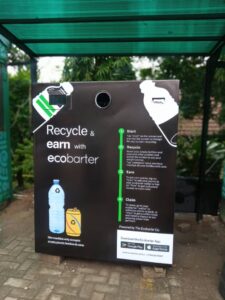
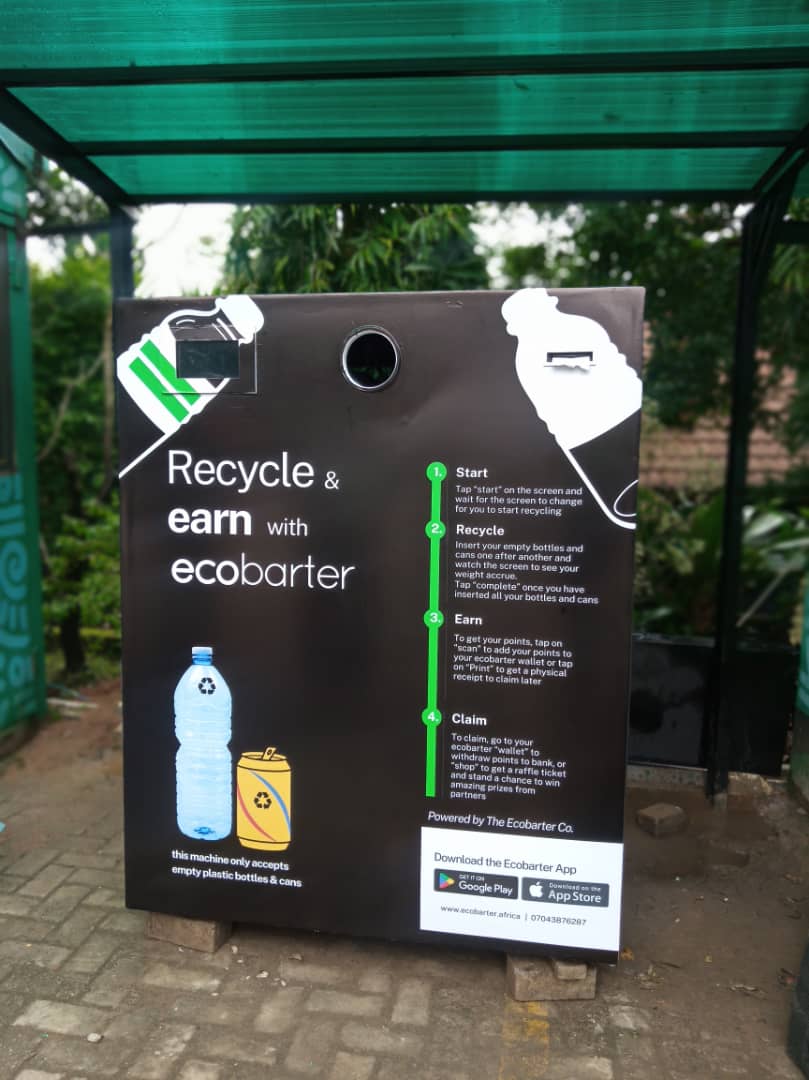
But for it to work, Nigeria needs strong political will, investment and public awareness. Infrastructures like reverse vending machines, collection hubs, and reliable logistics are also mission critical. That’s why Ecobarter’s launch of Nigeria’s first ever Reverse vending machine couldn’t have been more perfect.
Extended Producer Responsibility (EPR): Making Producers Accountable
The infrastructure for Deposit Return Schemes requires large investments that neither private social enterprises nor local governments are able to bear. This demands an extended producer responsibility funding mechanism.
The National Policy on Plastic Waste Management defines EPR as ‘an environmental protection strategy with the objective of decreasing total environmental impact from a product including its packaging, by making the producers of the product responsible for the entire lifecycle of the product, and the take back, recycling and final disposal of the product including its packaging.’
Unlike DRS which focuses mostly on beverage containers, EPR covers a wider range of products like plastics, glass, electronics, Tyres, batteries, and more.
The idea is simple: producers should not just sell products; they should also take responsibility for what happens when those products become waste.
South Korea made EPR compulsory in 2003. Today, recycling rates for packaging exceed 70%.
In Canada, EPR ensures producers cover the full cost of managing packaging waste, taking the burden off taxpayers.
Nigeria’s Current Reality
In Nigeria, the road to an effective DRS and EPR system faces real hurdles. low sensitization, lower technology adoption in everyday use, widespread technology integration, lack of enforcement for policies etc.
Nigeria has an EPR framework, but it is still voluntary. Producer Responsibility Organizations like the Food and Beverage Recycling Alliance (FBRA) have made progress, but without a legal mandate, participation remains limited.
If Nigeria made EPR mandatory:
- Companies would be forced to rethink packaging design.
- Government costs on waste management would reduce.
- Recycling businesses and green jobs would expand across the country.
The Combined Power of EPR and DRS
Countries that combined DRS and mandatory EPR have seen the strongest results.
In Germany, the mix of both systems has delivered some of the highest recycling rates in the world. Since introducing its bottle deposit system (Pfand) in 2003, Germany has built more than 135,000 return points, achieving about 98% return rates for bottles and cans. At the same time, its Packaging Act requires producers to take responsibility for packaging design and recycling. By 2022, the country was recycling over 90% of packaging waste, with plastics recycling nearly 69% in 2023.
Producers innovate packaging designs while consumers have direct incentives to recycle. Waste is no longer “waste” but a resource in a functioning circular economy.
In Nigeria, this could mean Coca-Cola, Sevenup, Rite Foods provide funding for collection infrastructures, and every consumer is mandated to return their bottles after use. This would take return and recycling rate from barely 10% to over 30% and more as implementation continues. It would also mean easier access to capital for deploying needed innovations and infrastructure.
How Ecobarter Is Building the Future
At Ecobarter, we’ve seen firsthand that Nigerians are ready for change when the right incentives are in place.
- Our reverse vending machines in Abuja and Lagos already reward people for dropping off bottles and cans, enabling thousands to use their wastes as a currency
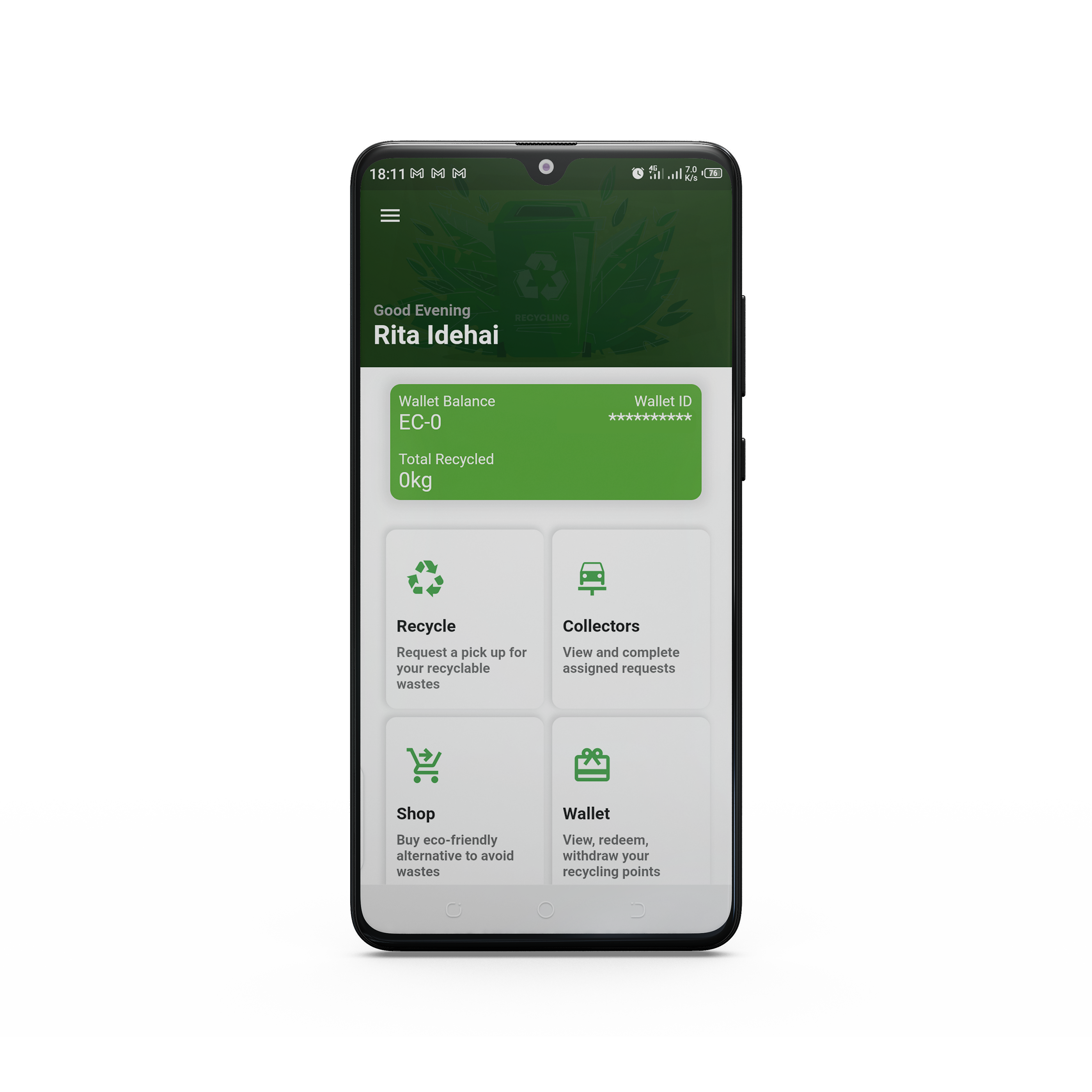
- Through our web and mobile application, households and businesses farther away from collection centers can schedule waste pick-ups, and we link them directly to our network of last-mile waste collectors who provide doorstep pickups
- By transforming waste into new products; from recycled fabrics to compost, we are creating value that supports livelihoods.
In many ways, Ecobarter is providing the early infrastructure Nigeria needs if DRS and mandatory EPR are to succeed.
In conclusion, Nigeria has talked about DRS and EPR for years. Policies exist on paper, but implementation has lagged. Meanwhile, other countries are already enjoying cleaner environments, booming recycling industries, and circular economies.
Roseline Idehai – Community Management Associate